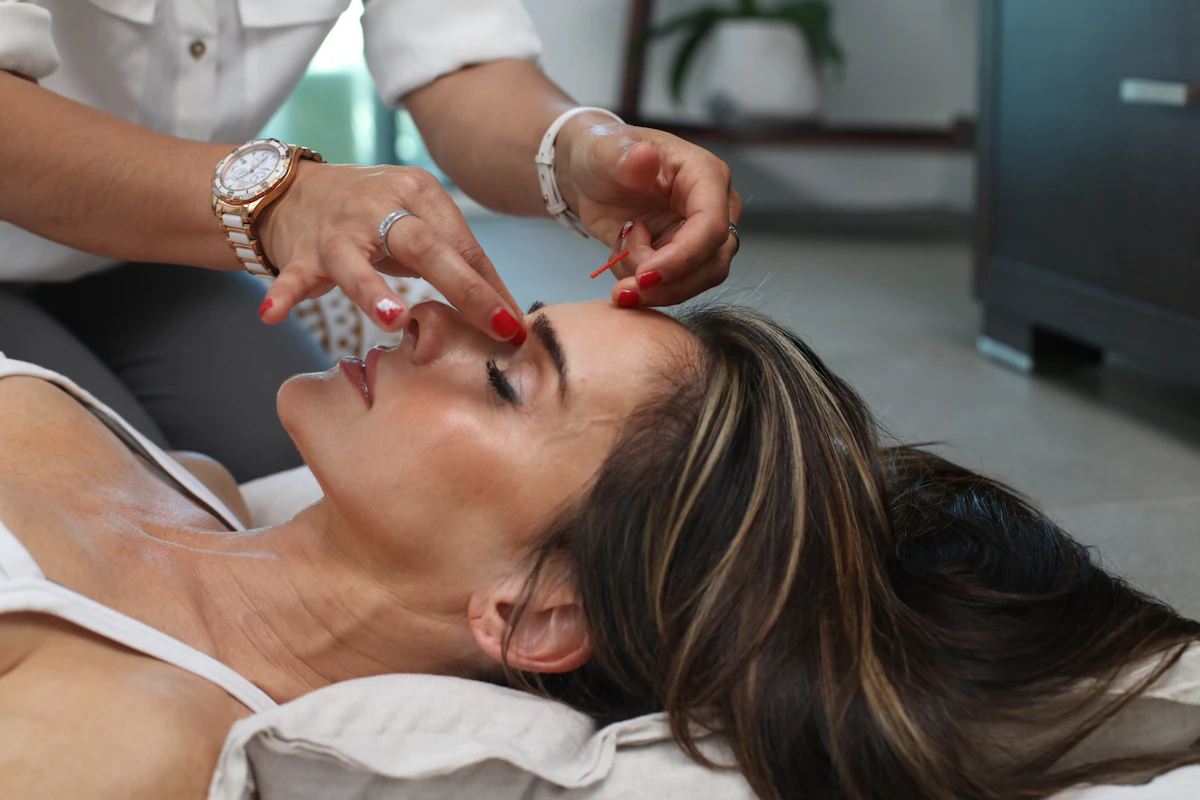


Someone asked me this on the phone last week, mid-booking, almost as an afterthought: "Wait, are you like a regular esthetician or...?" I get some version of that question often enough that I think it's worth answering properly instead of in the thirty seconds I usually have before we move on to picking a time slot.
The Short Version
I'm a licensed medical esthetician. The difference between that and a regular esthetician comes down to training depth and the treatments you're allowed to perform. Both require a license in Ontario. A medical esthetician's program goes further into skin pathology, contraindications, and the stronger end of professional-grade treatments — deeper peels, more aggressive resurfacing, working alongside or under the guidance that medical settings require for certain procedures.
Neither one is a nurse or a doctor. That part trips people up the most, so I'll say it plainly: I don't do injectables, I don't do Botox or filler, and there's no physician on site at Glisten. If that's what you're after, you want a med spa with an on-site prescriber, not a private aesthetics studio. What I do is skin — assessment, resurfacing, corrective treatment — and I do it within the scope my license actually covers.
Why It Ends Up Mattering to You
In practice, the difference shows up in two places: what's on the treatment menu and how the appointment starts.
A regular facial studio is built around relaxation services — the treatments are gentle enough that almost no one is turned away, and there isn't much of an intake process because there doesn't need to be one. That's a completely valid business and a lot of people want exactly that on a Sunday afternoon.
A medical esthetics appointment starts differently. Before I do a chemical peel or plan out a series for melasma or acne scarring, I want to know what you're using at home, what you've had done recently, whether you're pregnant or breastfeeding, whether you're on anything like isotretinoin. That's not paperwork for its own sake. Peel depth, for instance, has to be chosen against your actual skin and history, not just what looked good on someone else's Instagram before-and-after. Getting that wrong is how people end up with a chemical burn instead of a glow.
What This Actually Looks Like at Glisten
I trained as a medical esthetician, and the treatments I offer reflect that — chemical peels at a range of depths, microdermabrasion, dermaplaning, and facials that are built around what your skin is actually doing rather than a fixed 60-minute script. If you come in with active cystic acne, I'm not going to run the same peel I'd use on someone dealing with sun damage and fine lines. The assessment comes first.
People sometimes use "medspa" loosely, so I want to be precise about what it means here specifically: a private, women-only medspa in Brampton, run by a licensed medical esthetician, with no physician on staff and no medical procedures beyond the scope of that license. That's the whole picture. I'd rather tell you that upfront than have you show up expecting something I can't provide.
Questions Worth Asking Before You Book Anywhere
Not just here — anywhere you're considering for a stronger treatment.
- Is the person doing the treatment licensed, and for what specifically? Ontario licensing covers a range of scopes, and it's a fair question to ask directly.
- Do they ask about your skin history before a stronger treatment, or just book you in? A real intake is a good sign, not a bureaucratic delay.
- Are they clear about what they don't do? Anyone who claims to do everything under one roof, medical procedures included, without a physician present, is worth a second look.
The Honest Bottom Line
If your goal is a relaxing, unhurried facial, either kind of studio can give you that, and a lot of it comes down to who you feel comfortable with. If your goal is something more specific — fading real hyperpigmentation, working through acne scarring, actually changing your skin's texture over a few months — that's where training and license scope start to matter, because the stronger the treatment, the more that can go wrong in inexperienced hands.
I'd genuinely rather have this conversation with you before you book than after. If you're not sure which category your concern falls into, message me and describe it. I can usually tell you in a few sentences whether it's something I'd take on or something you should see elsewhere for.